Built for follow-up
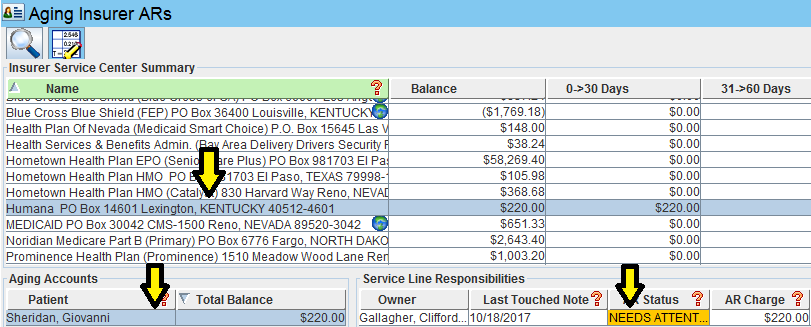
Accounts receivable is the money payers and patients still owe the practice for services it has billed. Iridium Suite organizes those balances so the collection process fits the way a billing office actually works: a workflow with reminders, priority queues, and screens that show everything needed to act on a claim, which is the payer, the balance, the age, the reason code from the remittance and the history of what has been tried.
What the work list does
- Fills automatically. Denials, short payments and takebacks from the electronic remittance are added to the list as soon as they post. Claims that pass the follow-up age for their payer are added too.
- Lists the largest, oldest balances first. Queues by payer, age, reason code and balance, and the same view as an aging report by payer and age bucket.
- Tracks the order of payers. Primary, secondary and tertiary coverage are stored on the account, so a balance moves to the next payer, or to the patient, without re-keying.
- Produces payer and patient correspondence. Appeal letters, corrected claims, statements and reminders are produced from the account, not typed from scratch.
The result is faster collections and steadier cash flow. For how to measure it, see days in A/R and a plan for working accounts receivable.
Frequently asked
When does a claim reach the accounts receivable work list?
When a remittance posts with a denial, a short payment or a takeback, or when a claim passes the follow-up age set for its payer. Staff do not have to sort it; the queue is built from the claims themselves.
Can accounts receivable be worked by payer?
Yes. Queues can be sorted by payer, age, reason code and balance, and the aging report shows the same balances by payer and age bucket, so the largest and oldest balances are worked first.
How are remittances posted?
Electronic remittances post automatically. Exceptions, which are denials, short payments and takebacks, are routed to the work list rather than posted automatically, so every one is seen by a person.
Does it handle patient balances too?
Yes. After insurance pays, the remaining balance moves to patient responsibility on the same work list, with reminders and statements, so patient and payer follow-up run on one screen.